
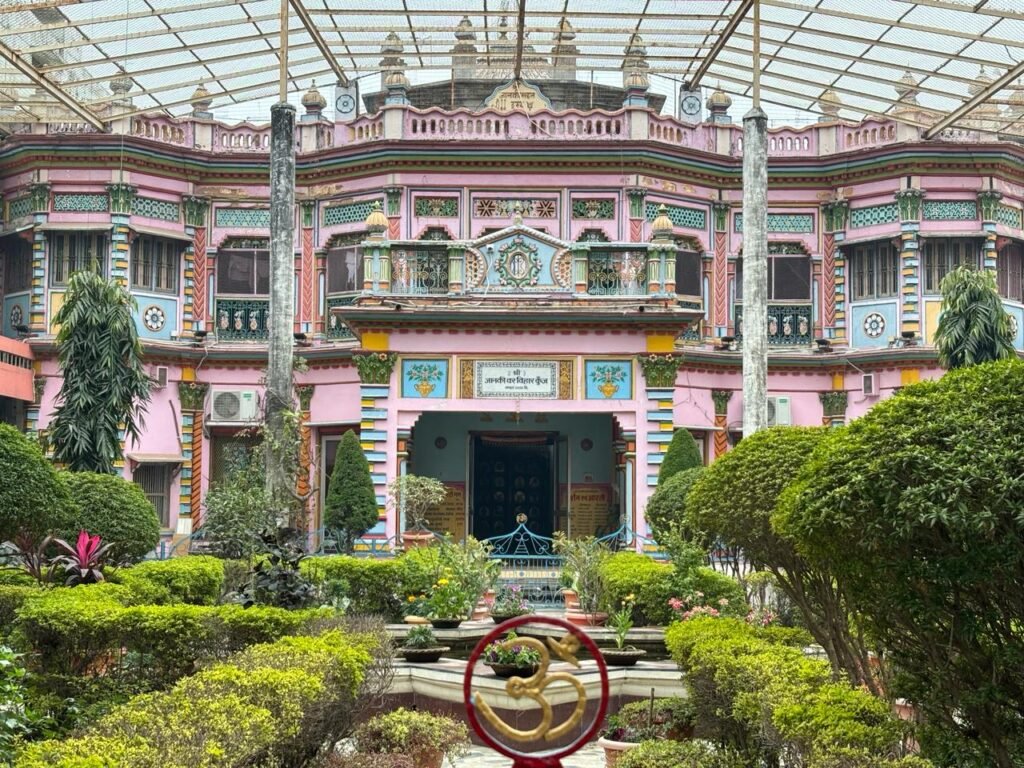
When people talk about Ayodhya, the first thing that comes to mind is the Ram Mandir, the birthplace of Lord Ram. But Ayodhya is not only about Lord Ram—it’s also about Mata Sita (Janki), his divine consort. And the place that keeps Sita’s presence alive in Ayodhya is the Sri Janki Mahal Trust.
Known as the “Sasural of Lord Ram” (since Sita came from Janakpur, Mithila), this trust is one of the most sacred spots in Ayodhya. For devotees, visiting the Ram Mandir feels incomplete without paying respect to Mata Janki at Janki Mahal.
Let’s look at why the Sri Janki Mahal Trust is so special and why it holds such a big place in Ayodhya’s spiritual and cultural life.
1. The Home of Mata Janki in Ayodhya
The trust is dedicated to Goddess Sita (Janki), wife of Lord Ram. In Hindu belief, Ram and Sita are inseparable—worshipping one without the other feels incomplete. That’s why this place is so important: it keeps alive the memory and devotion of Mata Janki in Ayodhya.
2. Ram–Sita Togetherness
Ayodhya is known as the city of Lord Ram, but the Janki Mahal Trust reminds us that it is also the home of Sita. The trust celebrates important festivals like Vivah Panchami, the divine wedding day of Ram and Sita, with great devotion. This makes it a place where their bond is honored, not just Ram alone.
3. A Place with History and Memories
The trust is not only about religion—it is also tied to modern history. On 14th January 1992, Narendra Modi, who was then just an ordinary BJP worker, stayed in room number 108 at the Janki Mahal Trust when he came to Ayodhya with senior leader Murli Manohar Joshi during the Ekta Yatra.
At that time, Modi vowed he would never stay in Ayodhya again until a grand Ram Mandir was built. He returned almost 28 years later, in 2020, as the Prime Minister, to lay the foundation stone of the Ram Mandir. This makes the Janki Mahal Trust a place with a deep historical and emotional connection.
4. Close to Ram Janmabhoomi
The trust is located very close to the Ram Janmabhoomi temple. That’s why most pilgrims visiting the Ram Mandir also come here. For many, darshan at Janki Mahal after Ram Mandir makes their trip complete.
5. Cultural Celebrations
The trust is also a hub of festivals and traditions:
- Vivah Panchami – the divine wedding of Ram and Sita.
- Ram Navami – the birth of Lord Ram, where Mata Janki is also honored.
These events bring together people from India and Nepal (where Janakpur, Sita’s birthplace, is located), showing the strong cultural bond between the two regions.
6. A Symbol of Faith and Balance
Devotees believe that praying at the Ram Mandir gives blessings of Lord Ram, but visiting Janki Mahal brings the grace of Mata Sita too. Together, it completes the spiritual journey of Ayodhya. Sita represents purity, sacrifice, and strength, and the trust keeps this message alive.
Conclusion
The Sri Janki Mahal Trust is more than just a religious site. It is a place that:
- Honors Mata Sita’s presence in Ayodhya
- Celebrates the union of Ram and Sita
- Preserves traditions and festivals
- Holds a unique place in India’s modern history because of Narendra Modi’s stay in 1992
If you are visiting Ayodhya, don’t just stop at the Ram Mandir. Make sure to also visit the Sri Janki Mahal Trust—because Ayodhya is not only the land of Ram Lalla, but also the home of Mata Janki, whose presence makes the devotion complete.