
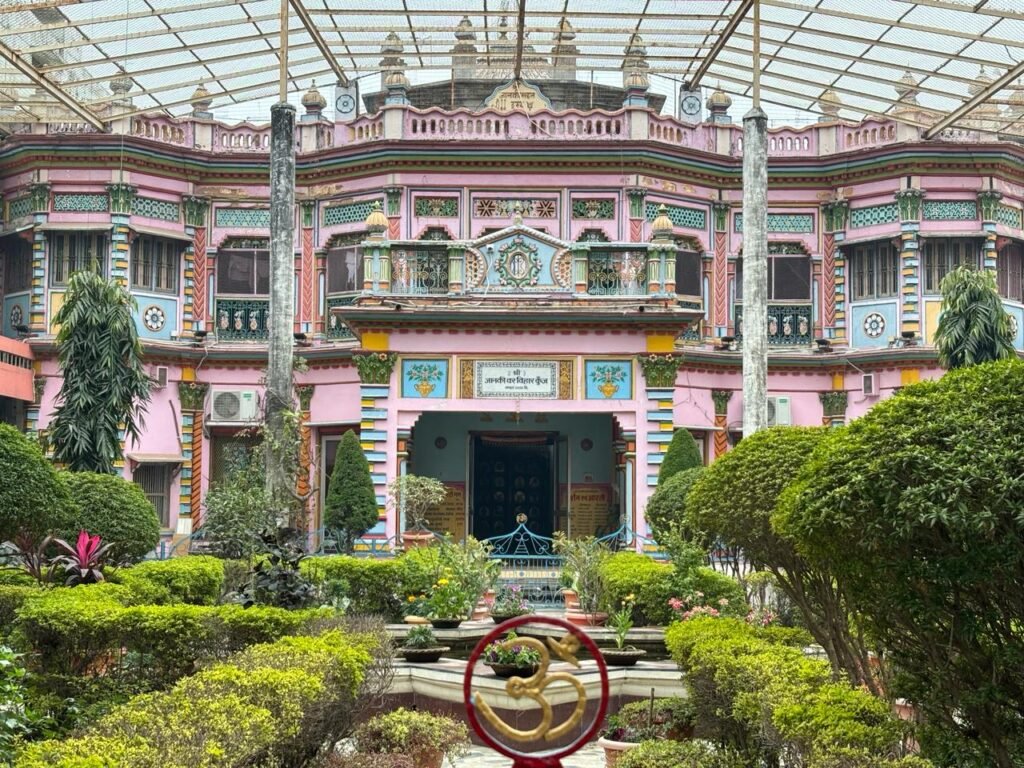
Sri Janki Mahal Trust
Ayodhya, the birthplace of Lord Ram, has always been at the heart of India’s spiritual and cultural identity. For millions of Hindus, it is not just a city but a symbol of faith, devotion, and dharma. The construction of the grand Ram Mandir has turned Ayodhya into a global center of attraction, drawing pilgrims from across the world.
But alongside the famous Ram Janmabhoomi, another place in Ayodhya holds great importance—the Sri Janki Mahal Trust. Known as the “Sasural of Lord Ram” (since Mata Sita belonged to Janakpur in Mithila), this trust has a very special connection with Prime Minister Narendra Modi.
To understand why Modi visited the Janki Mahal Trust, we need to revisit a story that began more than three decades ago, in the early 1990s.
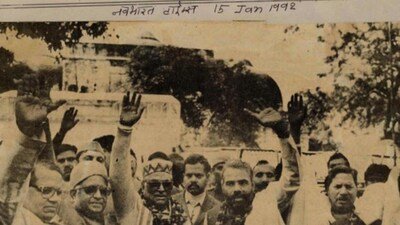
Narendra Modi’s Visit in 1992: The Beginning of a Connection
The year was 1992, a politically charged time in Indian history. The Ram Janmabhoomi movement was gaining momentum, and Ayodhya had become the center of national debate.
On January 14, 1992, Narendra Modi, then a young BJP karyakarta (functionary), came to Ayodhya along with senior party leader Murli Manohar Joshi as part of the famous Ekta Yatra.
During this visit, Modi stayed overnight at the Sri Janki Mahal Trust, in room number 108. At that time, he was not a Chief Minister, not a Member of Parliament, and certainly not the Prime Minister. He was just a dedicated worker of the party, playing his role quietly in the background.
This stay was modest—just an ordinary room, reached by a narrow staircase. But for the trustees and locals of Ayodhya, that night became unforgettable.
The Vow: Not to Stay Again Until the Ram Mandir Was Built
What makes this incident so significant is not just the fact that Modi stayed at the Janki Mahal Trust, but what he did afterward.
According to the trustees, Modi made a solemn vow:
He would never stay overnight in Ayodhya again until a grand Ram Mandir was built at the Ram Janmabhoomi site.
This vow showed two things:
- His deep personal devotion to Lord Ram.
- His commitment to the Ram Mandir movement, which was then only a dream for millions of Hindus.
For nearly 28 years, Modi kept his word. Though he visited Ayodhya several times for political and religious purposes, he never spent a night in the city.
His Return as Prime Minister in 2020
Fast forward to August 2020. By this time, Narendra Modi was the Prime Minister of India, leading the country with a strong mandate. After decades of legal, political, and social struggle, the dream of a Ram Mandir had finally come true.
On 5th August 2020, Modi returned to Ayodhya to perform the Bhoomi Pujan (groundbreaking ceremony) of the Ram Mandir. This visit was historic, marking the beginning of the temple’s construction.
For many devotees, this was the moment when Modi’s vow of 1992 was fulfilled. He had kept his promise—not to return to Ayodhya as a guest until the temple was built. And when he did return, it was as the Prime Minister of India, leading the nation in prayers at the very site where Lord Ram was born.
The 2024 Pran Pratishtha: A Spiritual Homecoming
In January 2024, Modi once again visited Ayodhya, this time for the Pran Pratishtha (consecration ceremony) of the Ram Lalla idol in the newly built temple.
For the people of Ayodhya, this was more than a political event—it was the culmination of centuries of faith, sacrifice, and struggle. Modi’s presence at this moment was deeply symbolic:
- He had once stayed in Ayodhya as a simple worker.
- He had vowed not to return until a temple stood.
- And now, he came back as the Prime Minister, to complete the circle by consecrating the idol of Ram Lalla.
Why the Janki Mahal Trust Matters in This Story
The Sri Janki Mahal Trust is central to this entire journey for several reasons:
1. A Spiritual Symbol: “Sasural of Lord Ram”
The trust is dedicated to Mata Janki (Sita), reminding devotees that Ayodhya is not just about Lord Ram but also about Sita. It represents balance—both the divine masculine and feminine energies of the Ramayana.
2. The Room Where Modi Stayed
Room number 108 at the Janki Mahal Trust is now a place of historical memory. It connects the image of Modi as a young, ordinary worker with the Modi of today, the Prime Minister of India.
3. A Bridge Between Past and Present
By visiting the Janki Mahal Trust, Modi acknowledged his roots, his early struggles, and his personal commitment to the Ram Mandir movement. It shows that even as a national leader, he has not forgotten his humble beginnings in Ayodhya.
The Political and Cultural Impact
Modi’s connection with the Janki Mahal Trust is not just about personal devotion. It also carries political and cultural meaning:
- It ties him directly to the Ram Mandir movement, which has shaped Indian politics for decades.
- It connects Ayodhya’s religious history with India’s modern political journey.
- It highlights the cultural importance of Sita, ensuring that devotion in Ayodhya is not one-sided but honors both Ram and Janki.
Lessons from Modi’s Visit
For devotees and observers, Narendra Modi’s visit to the Sri Janki Mahal Trust teaches several lessons:
- Commitment to Faith – His vow not to stay until the temple was built reflects unwavering belief.
- Patience and Dedication – He waited nearly three decades before returning, showing endurance and discipline.
- Respect for Tradition – By honoring Mata Janki through the trust, he reminded the nation that Ram’s story is incomplete without Sita.
- Humility – Even as Prime Minister, he remembered the room where he once stayed as a simple worker.
Conclusion: A Sacred Connection That Lives On
Prime Minister Narendra Modi’s visit to the Sri Janki Mahal Trust in Ayodhya is not just a matter of politics or ceremony—it is a deeply personal and spiritual story.
- In 1992, he stayed there as an unknown karyakarta.
- He vowed not to return until the Ram Mandir was built.
- In 2020, he came back as Prime Minister for the Bhoomi Pujan.
- In 2024, he returned again to lead the Pran Pratishtha of Ram Lalla.
Through it all, the Sri Janki Mahal Trust has stood as a silent witness—a modest building with a big role in connecting the past with the present.
For devotees, it is a reminder that Ayodhya is not just about Lord Ram, but also about Mata Janki, whose presence completes the story of faith. And for India, it is a symbol of how personal devotion, cultural heritage, and national history can all come together in one sacred place.